
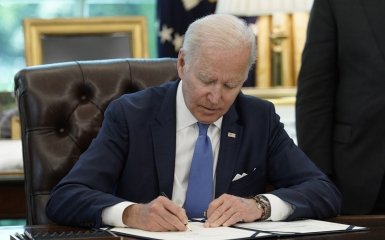
US President Donald Trump has declared invalid the pardons that his predecessor Joe Biden signed on his last day in office.
Points of attention
- The controversy surrounds former President Donald Trump's declaration of invalidity of the pardons signed by Joe Biden on his last day in office, attributed to the use of an automated signing device.
- There is speculation about the potential prosecution of political opponents such as Cheney, Milley, and Fauci following Trump's comments on the invalidity of Biden's pardons.
- The case highlights the scrutiny on the absolute power of presidential pardon in the US, with the possibility of courts imposing restrictions on its granting.
The pardons signed by Biden are declared invalid — Trump
Trump announced this on his social network Truth Social.
The "pardons" that a sleepy Joe Biden granted are declared null and void, of no legal force or effect, because they were signed by an automatic signature-reproducing device. In other words, Joe Biden did not sign them.

Donald Trump
President of the United States
The US President added that Biden didn't even know which pardons he was signing.
"The necessary pardon documents were not explained to Biden or approved by him. He knew nothing about them, and those who did may have committed a crime," Trump wrote, without providing any evidence to support his words.
Bloomberg notes that similar arguments were made by the conservative Heritage Foundation, which claims that Biden used facsimiles, based on seemingly identical signatures found on several of Biden's documents.
Trump's comments suggest his administration may try to go after some of the president's biggest political opponents, including former Congresswoman Liz Cheney, retired General Mark Milley and infectious disease expert Anthony Fauci.
The power of pardon has long been considered one of the president's most absolute powers — and courts have been reluctant to place any restrictions on how it is granted.
While Trump acknowledged that courts must ultimately decide on the merits of a pardon, his comments raise the possibility that the Justice Department could try to prosecute some of the president's biggest political opponents.
"It's not my decision — that's for the court to decide — but I would say they have no legal force because I'm sure Biden had no idea that was going on and someone used a fountain pen to sign and issue the pardons," Trump told reporters aboard Air Force One on Sunday night.
A 2024 federal appeals court ruling said that pardons do not have to be in writing. A 1929 Justice Department opinion noted that "neither the Constitution nor the laws prescribe the method by which a pardon is to be granted, or the evidence upon which it is to be granted. That is entirely within the discretion of the President."
In his post, Trump did not specify which pardon decisions he was referring to, however, as is known, on his last day in office, Biden preemptively pardoned members of his family, as well as a number of officials who could face prosecution by his successor.


