

US President Donald Trump is set to sign an executive order to lower the prices of prescription drugs, a move that he says will save the United States "trillions of dollars."
Points of attention
- President Donald Trump aims to lower drug prices in the US by signing an executive order, potentially reducing costs by 30-80% and bringing fairness to America's healthcare system.
- Trump plans to align US prescription drug prices with the lowest prices worldwide, aiming to save trillions of dollars for American citizens and promote fair treatment.
- Previous attempts by Trump to reform drug pricing, such as the Medicare pilot program, faced legal challenges from pharmaceutical companies fearful of revenue cuts and impact on innovation.
Trump plans to lower drug prices in the US
The US President, in his publication on Truth Social, noted that he plans to sign a corresponding decree on May 12.
Trump predicted that pharmaceutical prices in the US could fall by 30-80%.
At the same time, according to him, drug prices are likely to "rise around the world to equalize and, for the first time in many years, bring fairness to America."
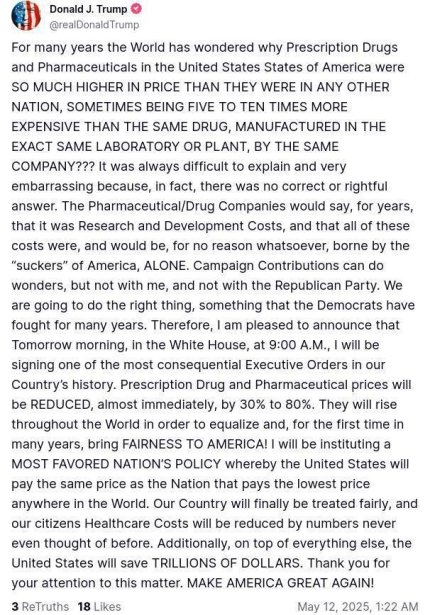
Trump announced his intention to ensure that the US pays for drugs "the same price as the nation that pays the lowest price anywhere in the world."
Our country will finally be treated fairly, and the costs of healthcare for our citizens will be reduced by an amount that was previously unimaginable.

Donald Trump
US President
Americans pay more for their drugs than any other country in the world, spurring innovation and fueling the growth of the pharmaceutical industry, Bloomberg notes.
Drugmakers have previously said that overhauling the system would cut revenue and “choke” the development of breakthrough treatments that could extend and improve lives.
During his first term, Trump proposed a pilot program in the US for Medicare drugs that would not compete with low-cost generics dispensed in doctors’ offices.
Trump’s plan, which was in place for three years, was intended to ensure that Medicare would pay the lowest price offered to a group of 22 countries.
The effort was overturned in US federal court after drug companies challenged it. They argued that the administration had not properly followed the rulemaking process.


