
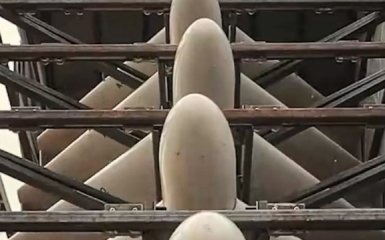
Over the past year, Russian factories have increased the production of attack drones, with which the enemy attacks Ukrainian cities every day, and recently there has been a record number of them.
Points of attention
- Russian factories have significantly increased the production of attack drones, leading to a record number of daily attacks on Ukrainian cities.
- The deal with Iran has played a role in the proliferation of technology and production of strike drones in Russia, with significant advancements in the designs of these drones.
- Russia's production of Shaheeds has allowed for faster, quieter, and more maneuverable drones, resulting in heightened effectiveness in aerial attacks on Ukraine.
Russia significantly scaled up the production of shaheeds to terrorize Ukraine
According to the Center for Information Resilience, since the beginning of 2025, more than 24 thousand Russian drones have already attacked Ukrainian cities.
It is noted that on July 9, Russia attacked the territory of Ukraine with the same number of drones that it launched in all of July 2024.
"They are constantly breaking new records," said Yuriy Ignat, spokesman for the Ukrainian Air Force.
The largest attack on Ukraine on July 9 was also helped by an agreement signed with Iran back in November 2022. Then the parties agreed on the production and purchase of Iranian Shahed attack drones on Russian territory.
A recent report by C4ADS, a nonprofit organization that researches illicit networks around the world, revealed that Russia paid $1.75 billion to Iran for Shahed technology, equipment, source code, and 6,000 drones.
It is indicated that by then, in 2022, Russia had already used up a significant portion of its long-range missile stockpiles, and cheap Iranian drones became an alternative, allowing Moscow to continue air attacks on Ukraine.
Analysts say the cost of producing one Shahed drone for Russia varies from $35,000 to $60,000.
Initially, the models were supplied directly from Iran, but later Russia took over various elements of the production chain. In Tatarstan, production facilities were expanded in the Alabuga special economic zone, where these drones are manufactured. Workers hired from Africa used Chinese components, and logistics networks that Iran had set up during its years of confrontation with the West were also used.
Although Ukrainian drones struck this facility, Russia managed to continue work on the production of "Shaheeds." According to Ukrainian intelligence, after these attacks, the enemy transferred some of the work to other facilities throughout Russia.
Moscow also improved the original design of Iranian drones, making them faster and quieter, increasing their maneuverability and maximizing the damage from their strikes.
Ukraine has official data that Russia is currently producing over 5,000 of these long-range drones and decoys each month. It is stated that some of these UAVs can fly 2,500 kilometers to their target.
However, according to Ignat, Ukrainian air defense is increasingly able to recognize such decoy drones, as they differ in appearance and sound from "shaheeds." To disable them, Ukraine uses only electronic warfare means.
However, Moscow also claims that Ukraine, in response, launches dozens of its drones into Russian territory every day.


