
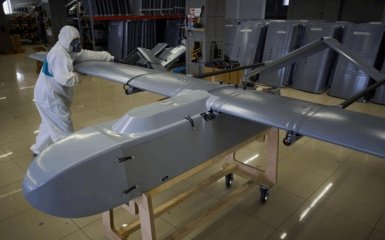
Ukrainian defense companies are forced to adapt production to constant Russian missile and drone strikes, abandoning large centralized factories and distributing the process between dozens of locations, often even in different European countries.
Points of attention
- The 'distributed production' model adopted by Ukrainian defense companies enhances resilience in wartime situations and protects against Russian strikes.
- Ukraine's experience highlights the importance of avoiding large centralized factories and adopting a multi-location production strategy to mitigate risks and threats.
Ukrainian defense industry finds way to counter Russian strikes
This approach should become the standard for the European defense industry as well.
It is noted that large enterprises in Ukraine have repeatedly become targets of attacks, including those of foreign companies. This has forced manufacturers to switch to a "distributed production" model, and in some places to work underground or in small hidden workshops. At the same time, this complicates logistics and increases costs.
Deputy Secretary of the National Security and Defense Council of Ukraine, David Aloyan, points out that European partners should take into account Ukraine's experience. "Some countries definitely should," he said.
Representatives of the defense business also hold a similar position. The head of the Ukrainian-Estonian company Ark Robotics, who for security reasons uses the pseudonym Achi, explains that his company is forced to work on the principle of distributed production. He adds that the enterprise avoids creating large "gigafactories" so as not to become an attractive target for attacks.
Ark Robotics, based in Estonia and with an engineering center in Kyiv, develops drones, ground robots, and software for autonomous systems. Its teams operate in several European countries, and some of its testing is conducted directly in Ukraine, sometimes near the front lines. Due to the increase in attacks, the manufacturer is already expanding its activities outside of Ukraine, fearing further destruction and risks to personnel.
Other Ukrainian companies have also moved to a multi-location model. Frontline Robotics, in particular, says its system is built to withstand the loss of any single site. At the same time, the company admits that this creates ongoing organizational complexity, as production is constantly "moving" between different points.
One of the key lessons companies have learned from the war in Ukraine is this: "Resilience cannot depend on a single facility, a single supplier, or a single geography. Modern defense requires distributed capabilities that can continue to operate under pressure."
Analysts and NATO officials also note that Ukraine’s experience is changing the way the West plans defense infrastructure. They emphasize that large centralized command centers and production hubs are increasingly vulnerable in modern warfare, where strikes can be delivered at long distances and with high precision.


