
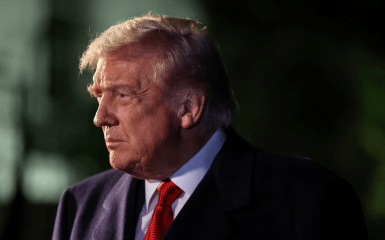
The US Supreme Court has ruled illegal most of the tariffs imposed by President Donald Trump's administration through the use of emergency powers.
Points of attention
- The US Supreme Court has declared most of the tariffs imposed by President Trump through emergency powers as illegal, citing exceeding authority under the IEEPA.
- Tariffs on imported goods from China, Canada, Mexico, and other countries were deemed illegal, while tariffs on steel and aluminum remain in effect.
US Supreme Court rules Trump tariffs illegal
The justices (6 to 3) ruled that Trump exceeded his authority when he imposed massive tariffs on imports into the US, citing the International Emergency Economic Powers Act of 1977 (IEEPA).
"We hold that the IEEPA does not give the President the authority to impose tariffs," said Chief Justice John Roberts.
The decision does not apply to all tariffs imposed by Trump. In particular, tariffs on steel and aluminum adopted under other laws remain in effect.
At the same time, two categories were abolished: the so-called reciprocal duties on individual countries — from 34% for China to the base 10% for the rest of the world, as well as 25% — on some goods from Canada, China, and Mexico, which the administration justified by their inability to stem the flow of fentanyl.
The U.S. Constitution vests the authority to impose tariffs in Congress. The IEEPA allows the president to “regulate” imports and exports in the event of an “unusual and extraordinary threat” to the nation, but it does not specifically mention tariffs. No president before Trump has used the law to impose them.
The lawsuits against Trump's tariffs were filed by several companies, including wine and spirits importer VOS Selections, Plastic Services and Products, and two educational toy companies. A separate lawsuit was filed by a coalition of states led by Oregon.
As of mid-December 2025, tariffs imposed under IEEPA had brought in about $130 billion, according to U.S. Customs and Border Protection. Trump had previously said much higher amounts — up to $3 trillion — taking into account trade deals.


