
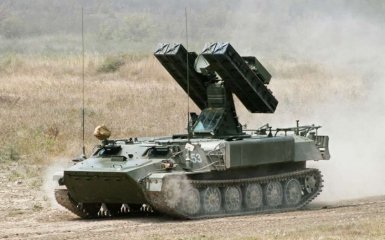
Operators of the Unmanned Systems Forces practiced on the enemy Strela-10 anti-aircraft missile system (SAM) and its crew.
Points of attention
- Operators of the Unmanned Systems Forces successfully targeted and destroyed the Russian army's Strela-10 air defense system and its crew.
- The drone pilot showcased exceptional skills in maneuvering to avoid missile strikes and conducting a precise strike on the air defense installation.
- The Strela-10 air defense system, a Soviet self-propelled system, was designed to engage air targets at low altitudes and was effectively neutralized during the operation.
USF hit enemy "Strela" along with its crew
According to the USF command, the enemy air defense system in the Donetsk region was discovered by operators of the 413th "Raid" battalion during a reconnaissance mission. The "Strela-10" immediately launched missiles.
But the drone pilot managed to maneuver and dodge the strike, after which the occupiers tried to hide the installation in a forest strip.
Thanks to the preservation of the device and the skill of the operators, the "Strela" was tracked down during a change of position and a precise strike was delivered. The air defense installation was hit along with the crew.
"Strela-10" is a Soviet self-propelled air defense system designed to engage air targets at low altitudes.
It was developed in the 1970s based on the MT-LB light armored personnel carrier.
The main armament is four 9M37 missiles or their modifications. The "Luch" variant has a maximum missile firing range of up to 10 kilometers.


