
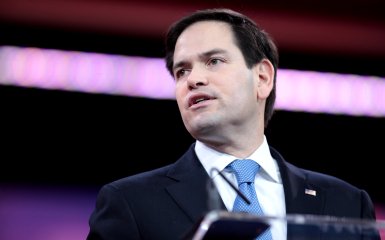
According to US Secretary of State Marco Rubio, US President Donald Trump has not yet imposed tougher sanctions against Russia because, he says, this would hinder Washington's role as a mediator between Ukraine and Russia in ending the war.
Points of attention
- The recent incursions by Russian drones and fighter jets into NATO countries have raised concerns about the need for stronger actions against Russia.
- The diverging views on Russian energy resources among European countries, including the rejection by Hungarian leader Viktor Orban, highlight the complexities of international relations in the context of sanctions.
Rubio reveals Trump's approach to negotiations
Once we start applying harsh sanctions and other measures, our ability to act as a mediator to achieve peace will be weakened.

Marco Rubio
Head of the US Department of State
Despite this, the American diplomat does not rule out a scenario in which the White House will still be forced to impose tougher sanctions against Russia in the future.
This warning from Mark Rubio came against the backdrop of recent incursions by Russian drones and fighter jets into the territory of several NATO countries.
Also, traditionally, the head of American diplomacy shamed US allies in Europe for continuing to buy Russian oil and gas.
According to Marco Rubio, this is an "absurd decision."
That is why the head of the State Department called on European partners to make more efforts to increase pressure on the Kremlin.
By the way, the team of Hungarian leader Viktor Orban once again rejected this demand of Donald Trump and stated that it would continue to buy Russian energy resources.


