
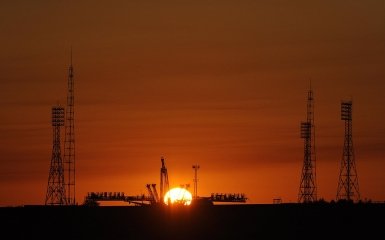
For the first time in 60 years, the aggressor country Russia lost the ability to send people into space due to an accident at the Baikonur Cosmodrome - it occurred after the launch of the Soyuz MS-28 spacecraft.
Points of attention
- The loss of the only operating platform for manned launches highlights the vulnerability of Russia's space infrastructure and the importance of swift restoration efforts.
- This unprecedented event underscores the challenges and risks associated with space exploration and the need for stringent safety measures in the aerospace industry.
Russia is facing a new serious problem
According to opposition Russian media, immediately after the launch of the Soyuz MS-28 spacecraft, the service cabin collapsed on the 31st platform.
Moreover, it is indicated that the elements of the starting table were damaged.
After a detailed analysis of the published footage, it became clear that a large metal structure was in the gas duct under the rocket, which should not have been there.
There is a high probability that this could have been a technical service module that was supposed to be hidden before launch, but for unknown reasons remained under the structure.
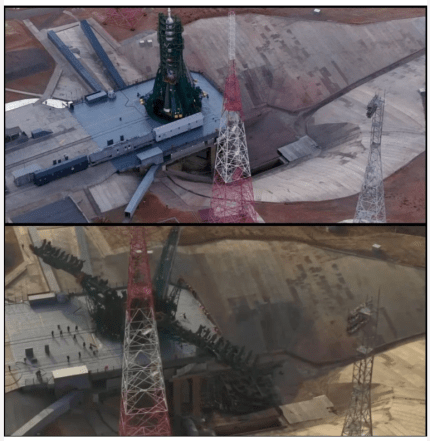
What is important to understand is that the damaged site is the only operating platform for manned launches of spacecraft to the ISS.
And this de facto means that a new accident could cause the delay of all future Soyuz and Progress flights for an indefinite period.
It has already deprived the aggressor country of the ability to send astronauts into space — something like this has not happened since the early 1960s.
Roscosmos has already publicly acknowledged the damage, and has also begun to assure Russians that "all necessary spare parts are available" and that restoration will be carried out in the near future.


